4 powerful ways to use web scraping for high-impact digital PR campaigns
Digital PR often involves collecting data and then aggregating it to create citable statistics and shareable visuals. axiom.ai can often help you with collecting this data. We will show you some examples of successful campaigns that could be recreated with the help of automations.

What is Digital PR?
Digital PR is a way of building links to your website in order to increase its ranking in search engines. It involves creating a page on your website, usually one that includes data analysis, and then pitching it out to journalists who will then cite your study in their articles.
An example of a successful digital PR campaign was Radical Storage's study into the most underwhelming cities for tourists. This looked at the percentage of negative comments for popular tourist destinations on websites like TripAdvisor and Yelp.
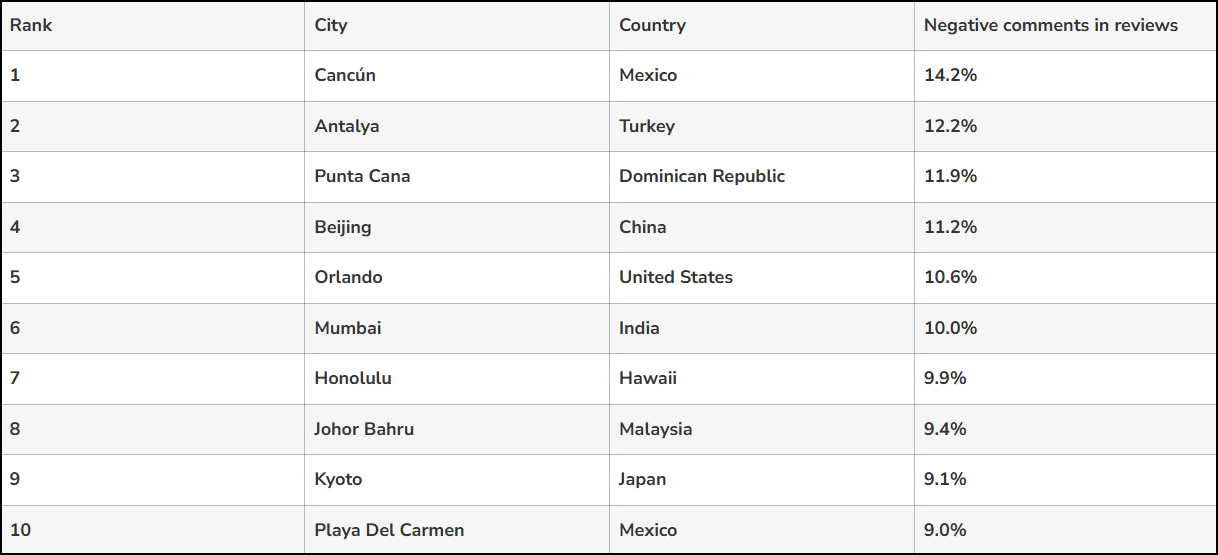
This study then got features in websites such as:
- Time Out Magazine
- Euronews
- CNN
- Der Standard (one of the biggest national newspapers in Germany)
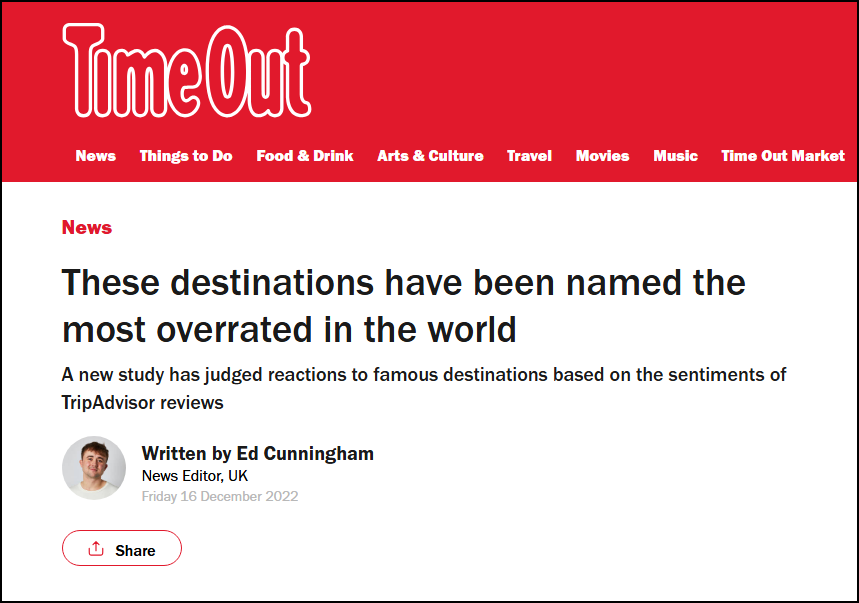
Time Out’s article on the topic. Radical Storage’s research is cited with a link in the article’s body. Source: https://www.timeout.com/news/these-destinations-have-been-named-the-most-overrated-in-the-world-121622
How can axiom.ai help with digital PR?
axiom.ai can help you automate the process of collecting the data required to conduct these studies.
Looking back at our previous example, an automation could have helped us with:
- Collecting a seed list of popular tourist cities and putting them in a Google Sheet.
- For each city, collecting their most popular tourist attractions on TripAdvisor and putting them in a Google Sheet.
- Collecting reviews from Google My Business (Google Reviews), TripAdvisor and Yelp for each tourist attraction and putting them into a Google Sheet.
These could all be achieved using the Scrape and Spreadsheet steps. Doing this manually would take you days. Scraping the data means that the only manual work you have to do is create this study is analysing the reviews themselves and then your final aggregation.
Let's now run through four examples of how we can speed up data collection for digital PR campaigns using axiom.ai.
Scraping Coinopsy's list of dead coins
The first example we'll look at comes from a campaign done by a cryptocurrency blog called Coin Kickoff, which looked at how the percentage of cryptocoins no longer exist and analysed when and why these cryptocoins were abandoned. The post has been cited in over 200 outlets, including AOL and Nasdaq.
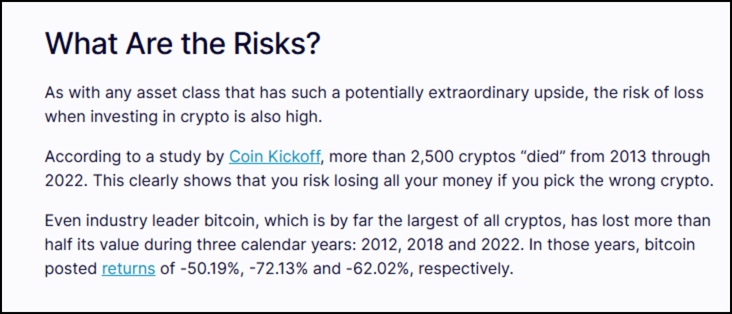
This is how the study was cited in Nasdaq. Source: https://www.nasdaq.com/articles/crypto-and-your-retirement-savings-should-you-risk-it
Coin Kickoff said in the study that they found a list of 2,500 dead coins from a website called Coinopsy along with their year of and reason for death. You can find a video on how to get this information below:
Since we only needed to scrape information from one page, this was a relatively simple automation to implement. However, doing it manually would have taken at least a couple of days as you couldn't just copy and paste the data into a Google Sheet.
Scraping IMDB to collect data on filming locations
Our next example is based on a campaign on the most popular horror movie filing locations in the USA, run by a travel insurance company called Insure My Trip. The campaign got featured in 46 outlets, including:
- Texas Tribune
- LA Times
- Cincinnati Today

The link goes back to Insure My Trip’s study. Source: https://www.texastribune.org/2023/10/31/texas-horror-movies-ghost-tours/
Insure My Trip said in their study’s methodology that they:
Scraped each city’s IMDB location page and the number of titles which were included in the "Horror" genre was recorded.
The video below shows how you can scrape information from IMDB in this way using axiom.ai:
As mentioned in the video, IMDB is a relatively easy website to scrape information from because it uses a highly formulaic URL structure. For our next example we will look at scraping information from a website without
Scraping CrimeMapper to collect crime statistics for a specific area
Our next example comes from outdoor activity blog Outforia’s study into the most dangerous beaches in the USA. As part of the study, Outforia looked at the total number of reported crimes in coastal areas from the website Crimemapping.com. They combined this with other data to make an index of the most dangerous beaches.
The study was featured in fifteen different outlets including:
- Orlando Sentinel
- The Epoch Times
- 24/7 Wall Street
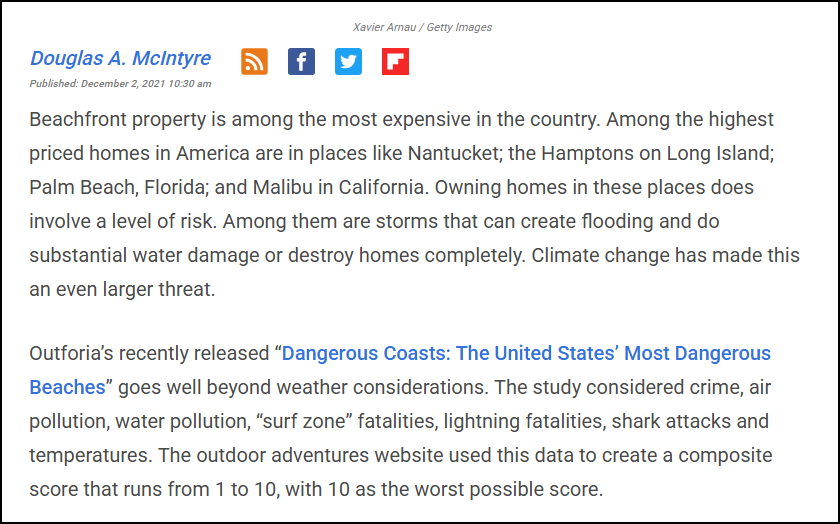
An example of the study’s citation in the 24/7 Wall Street. Source: https://247wallst.com/economy/2021/12/02/americas-most-dangerous-beach/
The video below shows you how you can use axiom.ai to automate collecting this data if you have already have a sheet of locations that you want to get crime statistics data for:
As you can see, since the website that we want to collect information from does not have a uniform URL structure, we needed to get axiom.ai to automate clicking around the site. We can do this by using a combination of Enter text, Click element and Wait steps.
Scraping Airlinequality.com to collect data on the best and worst airports
Our final example comes from Business Finance UK who conducted a study into the best and worst airlines for business travellers. The study involved aggregating reviews from business travellers on the airline review site airlinequality.com.
The study was featured in outlets such as:
- Time Out
- The Manila Standard
- The Chicago Crusader
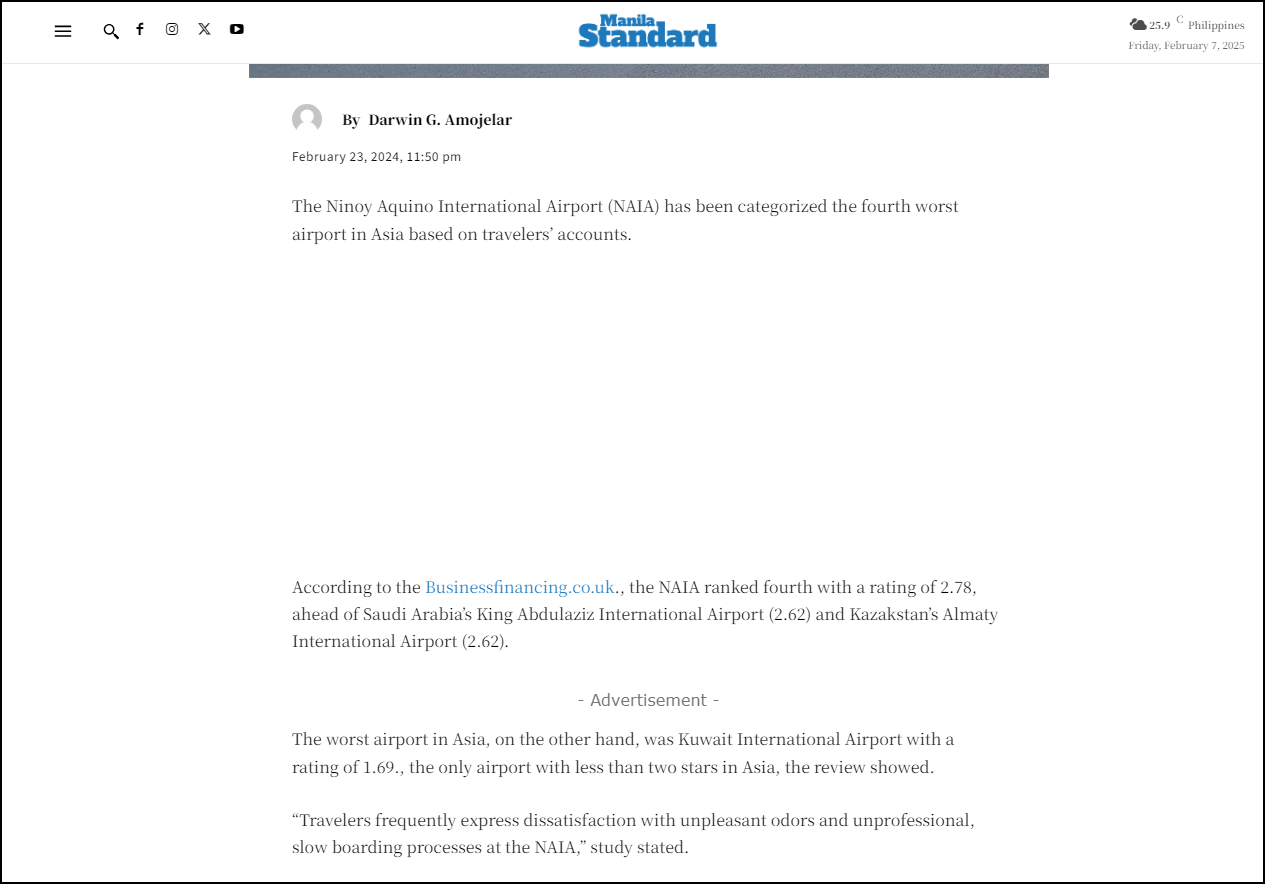
An example of the feature’s study in the Manila Standard. Image source: https://manilastandard.net/?p=314419547
The video below shows you how axiom.ai can automate collecting business reviews for each airport:
As mentioned in the video, this automation required some custom code in order to match reviews to specific airlines.
I sent axiom.ai’s customer support team a video explaining what I wanted the automation to do and they helped me with putting together some custom code that I could paste into the Write Javascript step which solved the problem. As a side note - I’ve also managed to work through other problems by searching through the axiom.ai subreddit.
Wrapping up
As we’ve seen from these examples, axiom.ai can automate a lot of the tedious data collection involved in putting together data studies for digital PR campaigns.
If you’d like to see more examples of digital PR campaigns that use scraped data then its worth checking out this digital PR campaign database.
Click the filter button at the top of the database and then click on the dropdown “Data type” -> has any of -> scraped data, and you can find dozens of campaign examples that use scraped data.
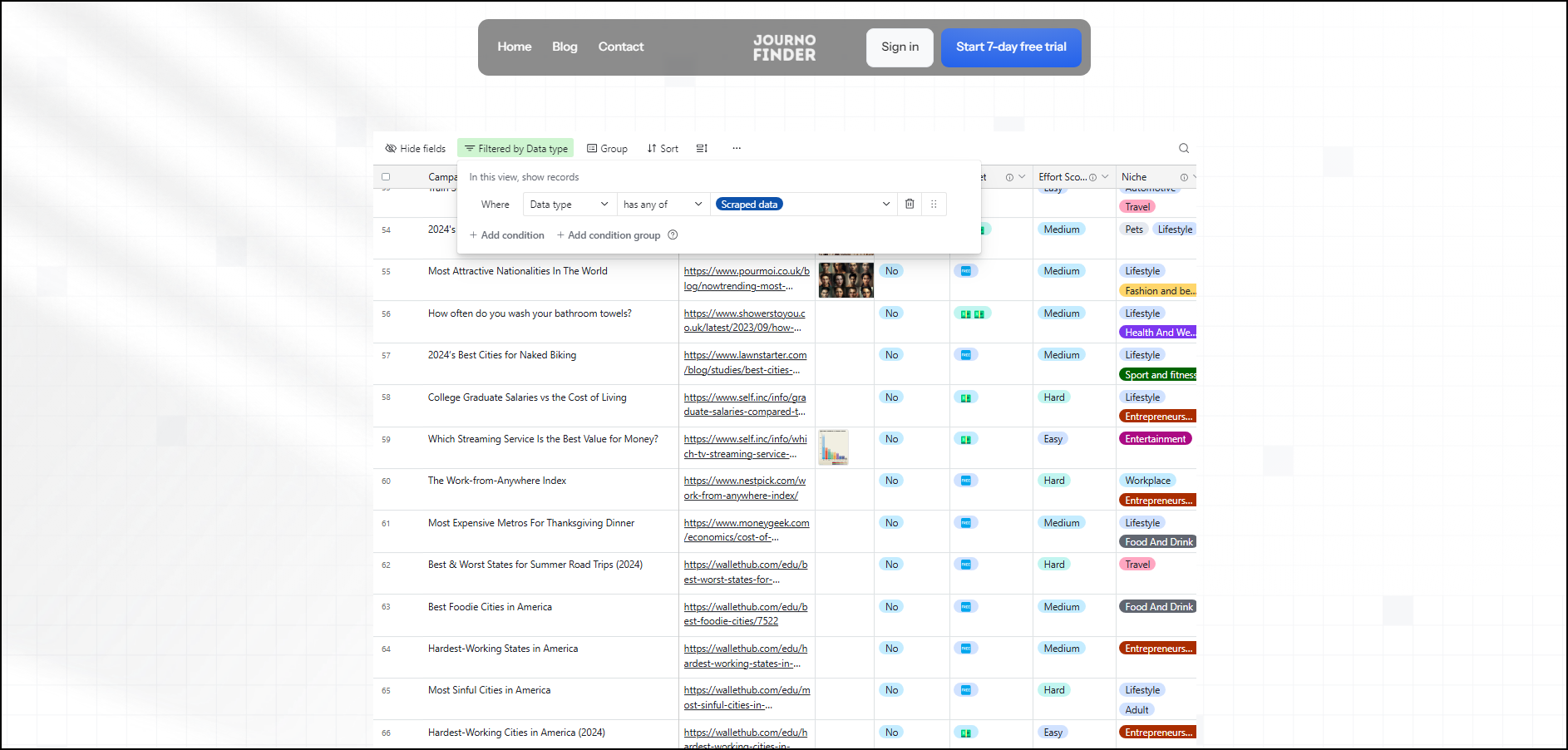
JournoFinder, https://journofinder.com
Hopefully this can give you some inspiration for a digital PR campaign for your own site.